
21/10/2026 09:09
Hello or Ready to Quote? Telegram Greetings for Cambodian Custom-Doormat Shops

A photograph of a custom doormat can attract a simple question: “How much?” The shop still needs to know the requested size, quantity and intended use before preparing a useful answer. For a Cambodian workshop promoting its products through social media, this first exchange deserves as much attention as the photograph. A Telegram greeting can explain what to send while staff are serving someone at the counter. The practical goal is a conversation that staff can continue without making the customer repeat everything. This guide develops a greeting workflow for a hypothetical custom-doormat shop, connects it to responsible SMM-panel decisions, and explains how to check whether the message actually helps.
1. Define what the first reply should accomplish
Start with the information that changes your next answer. A doormat enquiry might concern a ready-made item, a custom size or a design printed for a business entrance. Asking every customer for a complete production specification creates unnecessary work. Instead, help people identify their request and provide the minimum detail needed for a staff member to respond intelligently.
For a hypothetical Phnom Penh workshop, that minimum could be the sample pictured, approximate width and depth, and quantity. If the buyer cannot measure yet, allow a question or a simple photograph instead. Success at this stage means the next reply can address the customer's situation. It does not mean a quotation has been accepted, stock has been reserved or a production slot has been allocated.
2. Understand the greeting trigger before writing the message
Telegram's official Business introduction says greeting messages can respond automatically when users contact a business for the first time. It also describes an inactivity period after which a new incoming message can trigger another greeting. Automated messages can exclude particular chats or categories. These controls matter when the same account receives customer, supplier and personal conversations. Source: https://telegram.org/blog/telegram-business
Telegram's Business documentation lists these features as available to Premium subscribers. Check the options in your own app before building a promotion around them. In Settings, look for Telegram Business and its greeting controls; inspect the text, recipients and repeat setting before saving. This article concerns private customer enquiries. Treat joining a channel and contacting the shop as separate actions. Source: https://core.telegram.org/api/business
3. Write a greeting that asks for a manageable next step
Use a short acknowledgement, a focused request and a clear explanation of what happens next. Here is hypothetical English copy for a shop to adapt: “Thanks for contacting our doormat workshop. For a new quotation, please send the sample you mean, the approximate mat width and depth in centimetres, and the quantity. If you are unsure, tell us where you plan to use it. Our team will check the details before confirming a price or production date.”
The wording gives customers an alternative when they lack measurements. It also avoids presenting automation as a completed assessment. Prepare the actual customer message in the language your audience uses, with a fluent Khmer reviewer where appropriate. Keep units explicit in every version. Ask the reviewer to check whether ‘mat size’ could be misunderstood as the full doorway opening, because those measurements may describe different requirements.
4. Make the promotional post and greeting work together
The social post should give enough context for the first message to make sense. Show the whole mat and a useful detail of its surface or backing. Explain which pictured item customers should reference. If the photograph illustrates a past custom design, say so rather than suggesting that exact item is waiting for collection. Keep changing availability information out of a permanent greeting unless someone owns its updates.
Imagine a hypothetical Siem Reap café owner seeing a post featuring a rectangular entrance mat. The post invites a quotation enquiry with a sample reference and approximate dimensions. The greeting then requests the same information, with an option for buyers who need measuring help. If the post instead promises an immediate fixed price while the greeting starts a lengthy assessment, the two messages create conflicting expectations.
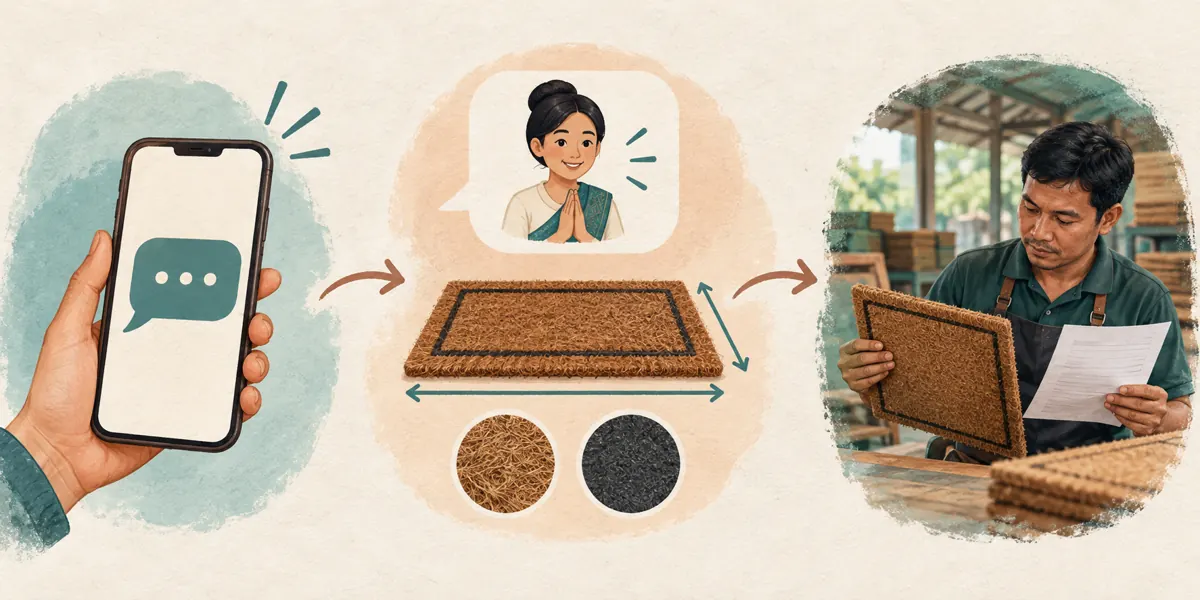
5. Choose recipients and repeat behaviour deliberately
Before enabling the greeting, identify who uses the business account. A supplier sending a material update should not receive instructions for ordering a household doormat. Review available exclusions against your actual conversations. Be careful with broad exclusions: an existing contact could also become a customer. Write down why each category is included or excluded so another staff member can understand the decision.
Choose the offered repeat interval according to how customers return, rather than selecting the shortest option automatically. Someone returning about an unfinished quotation may find a fresh introductory message confusing. Make the copy resilient: add a brief instruction such as “For an existing enquiry, please mention the sample or previous quotation.” Avoid requiring a returning buyer to repeat their measurements before staff have checked the conversation.
6. Test the experience with consenting helpers
Ask a colleague or another consenting helper to test the configured experience. Use an eligible new conversation to check whether the greeting appears and whether its request is understandable on a phone. Separately inspect an established conversation and an excluded chat. Record the conditions and observations; a test in one chat does not establish how every recipient category behaves.
Read the exchange from the customer's perspective. Can the helper identify the next step without an explanation from you? Does the greeting appear to answer a question it has not actually assessed? If other automated messages are enabled, inspect the combined experience for repetition or conflicting promises. Recheck after editing. For the inactivity condition, verify the selected setting and observe an eligible returning conversation when the required interval has genuinely passed.
7. Give staff a clear handoff after the greeting
Assign someone to review incoming enquiries during the shop's stated service periods. Their first job is to read what the customer already supplied. If width and quantity are present but depth is missing, ask only for depth. If the customer asks whether a mat suits an exposed entrance, address that question using verified product information before requesting artwork or discussing payment.
In a hypothetical exchange, a buyer sends “80 by 50, two pieces” alongside a sample photograph. Staff should confirm the unit and whether those are the desired finished dimensions. They can then check material, design requirements and fulfilment arrangements. A compact internal note might say “dimensions awaiting confirmation” or “ready for quotation.” These are staff decisions based on the conversation, not conclusions drawn from the automatic greeting.
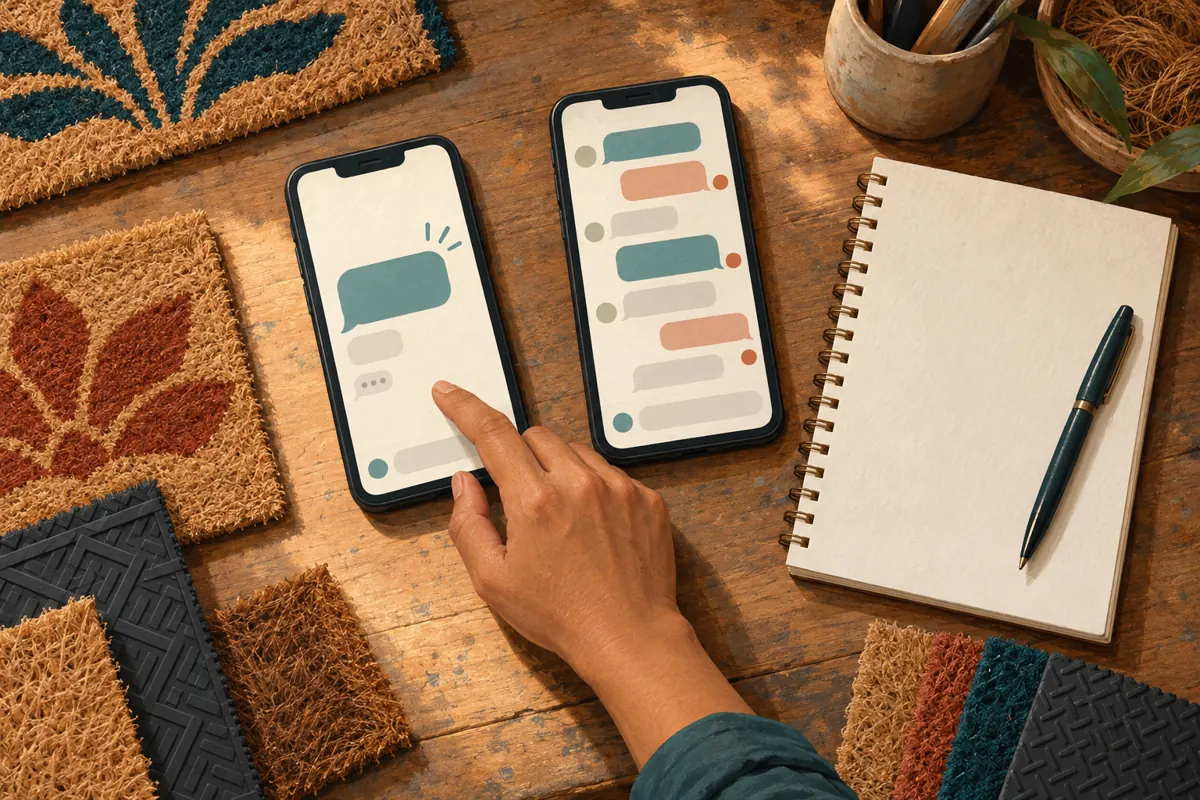
8. Decide whether an SMM-panel service fits the actual objective
The supplied smm-asian.com catalogue includes “Telegram Channel/Group Members ~ Max 1M ~ 100k/days ~ Instant ~ 𝐍𝐎 𝗥𝗘𝗙𝗜𝗟𝗟”. Its title identifies a channel/group membership service, but the brief provides no supporting description. Treat the quantities, timing and other wording as catalogue claims requiring clarification, not independently verified delivery promises. Nothing supplied establishes that this service configures Business greetings or generates quotation enquiries.
If your objective is better first conversations, improve and test that workflow directly. Purchased engagement is not evidence of genuine interest, sales, ad delivery or Cambodian users. A membership total cannot establish that people need custom doormats or have contacted your workshop. Before considering a panel request, identify the exact outcome the service describes, review its current terms and platform compatibility, and decline it when that outcome does not answer your business need.
9. Keep the greeting relevant and avoid unwanted outreach
A customer asking about a mat needs a useful response to that enquiry. Do not turn the greeting into a wall of unrelated offers, a demand to join several channels or a request for unnecessary personal documents. For an initial quotation, a general delivery area may be sufficient. Ask for a full delivery address later if it becomes necessary to arrange an agreed order.
Telegram's Spam FAQ warns that unwanted messages and unsolicited advertising can lead to account restrictions. It also cautions against adding people to unwanted groups or channels. Do not collect usernames from a membership list and send them the greeting as a sales pitch. Let the customer initiate the enquiry and keep follow-up relevant to what they requested. Source: https://telegram.org/faq_spam
10. Review misunderstandings before increasing promotion
After a practical review period, examine the enquiries your staff actually handled. Note which requested details customers understood, which questions repeatedly required clarification and where staff had to correct expectations. Keep personal details out of editorial review notes. Useful observations include “buyers supplied doorway width instead of mat width” or “returning customers thought they needed a new quotation.” These observations suggest specific copy changes.
Change one substantial element at a time where feasible. For example, replace “send the size” with “send the desired finished mat width and depth in centimetres,” then watch for the same misunderstanding. Do not attribute an improvement automatically to the greeting if the promotion, product range or staffing also changed. Maintain separate records for panel delivery, customer conversations, quotations and confirmed orders so each conclusion has appropriate evidence.

Frequently asked questions
Should the greeting include a price?
Include a price only when it accurately describes a clearly identified item and someone maintains it. Custom work may depend on dimensions, materials, quantity and design. If these are unresolved, explain what staff need to prepare a quotation. A vague starting price can create more confusion than a short request for the relevant specifications.
What if a customer sends only a photograph?
Use the photograph to understand the request, then ask for the missing detail that matters most. Do not infer exact dimensions from perspective or nearby objects. For example, staff could ask whether the customer wants the pictured design or the pictured size, followed by a measurement request. Avoid repeating the entire greeting.
Does an automatic greeting mean someone has read the enquiry?
The automatic response should not be presented as evidence that staff reviewed the message. Make the distinction clear in your wording and staff process. A human reply should address the customer's actual details, identify anything still missing and explain the next step. Reserve order confirmations for an explicit, reviewed agreement.
Can a Telegram membership service bring Cambodian quotation requests?
The supplied membership-service title does not establish that outcome or audience origin. Membership, an enquiry, an accepted quotation and a sale are different events. Evaluate each using its own evidence. If your immediate problem is incomplete customer messages, spending time on the greeting and staff handoff addresses that problem more directly.
What should the shop do if the greeting feature is unavailable?
Check the account's available Business options and the official eligibility information. Meanwhile, staff can use an approved manual opening response and adapt it to each enquiry. Keep the same principles: request only useful details, state units clearly and avoid implying that a quotation or production date has already been confirmed.
Explore the current service catalogue, create an account, or ask a specific question through support tickets.
Prepared with AI assistance. Illustrations explain the workflow and do not represent customer results.