
21/10/2026 20:21
Does the Sleeve Really Fit? TikTok Duets for Cambodian Umbrella Shops

A compact umbrella can look easy to pack until a customer tries to slide it back into its sleeve. A shop video may show the finished result without explaining how the fabric was gathered or whether that sleeve belongs to the same model. For a Cambodian umbrella retailer, this is a useful promotional question: can two demonstrations shown together explain the fit more clearly? TikTok Duet offers a way to place an additional video alongside an existing one. The value comes from the explanation, accurate product identification and a clear next step for buyers. This guide uses a hypothetical Phnom Penh umbrella shop to develop that workflow, including the decision about whether an SMM-panel service has any legitimate role in the task.
Start with the fit question
In this hypothetical example, the shop sells compact umbrellas and replacement fabric sleeves. Customers send photographs asking whether a sleeve will fit, but the photographs often show only the umbrella when open. The shop wants to demonstrate why the folded bundle matters. Its editorial goal is specific: help a viewer identify the relevant umbrella and understand what information the shop needs before confirming compatibility.
Write that goal before choosing a format. A useful brief might say: show the same umbrella loosely gathered and neatly wrapped, then explain that sleeve compatibility still depends on the model and dimensions. Avoid turning the demonstration into a claim that every tight sleeve can be made to fit. Fabric arrangement can explain one problem without resolving every possible mismatch.
Decide whether simultaneous footage helps
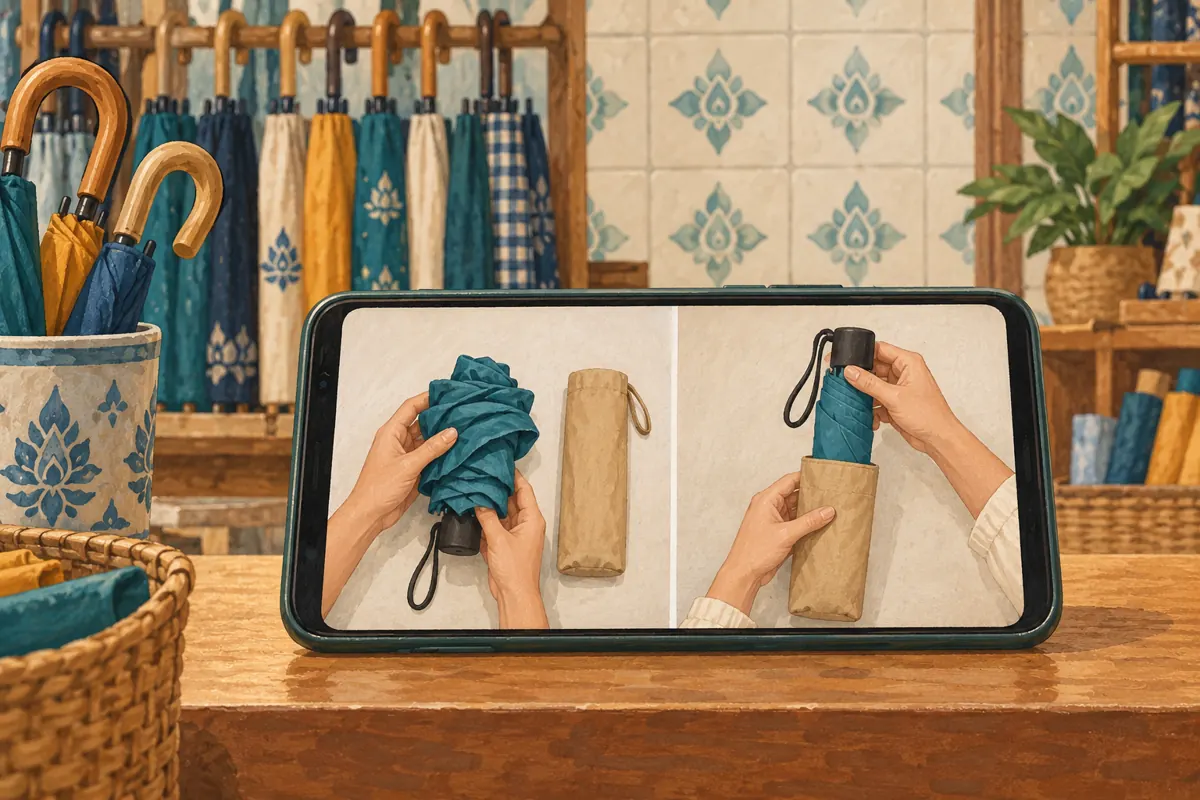
TikTok describes Duet as a split-screen video that uses another video alongside new content. For this shop, simultaneous footage is useful when viewers need to compare the shape of the bundle at the same stage. One pane can preserve the original demonstration while the other adds a closer explanation of the fabric gathering.
Choose a normal standalone video when the important detail needs the full screen. A small fastening strap, narrow sleeve opening or subtle seam may become harder to see in a divided frame. Make a simple decision test: pause the planned comparison and ask a colleague to identify the difference without coaching. If they cannot see it, enlarge the demonstration or film the steps sequentially. The format should earn its place by improving comprehension.
Choose an appropriate original video
Begin with shop-owned footage or an agreed collaboration with an adult demonstrator. Review the complete source video, including its spoken claims and caption. A neat visual match is insufficient if the original describes a different umbrella, promises universal compatibility or contains an expired offer. Record the source link and the exact product shown so the editor can return to the correct reference.
If another creator supplies the source, explain the intended commercial context before recording your response. Confirm that you can use the relevant footage and audio, and do not present participation as a customer recommendation. TikTok’s Integrity and Authenticity guidance requires creators to share material they created or have the right to share. A visible reuse option does not establish that every commercial claim or implied endorsement is appropriate.
Review the reuse controls deliberately
TikTok’s Duet privacy guidance places account controls under Profile, Menu, Settings and privacy, Privacy, then Reuse of content. A public account is required to let others Duet its videos. Individual posts also have an Allow reuse of content setting. Review the source account and post settings with the owner instead of assuming every public video is available.
The same guidance explains that turning off Duet through this control also affects Stitch, stickers and adding posts to Stories. Treat the change as a broader reuse decision. For the hypothetical shop, a reusable product demonstration might be appropriate, while footage containing a customer’s belongings may need different treatment. Record the intended setting in the content brief so a later assistant understands why it was chosen.
Prepare three matching moments
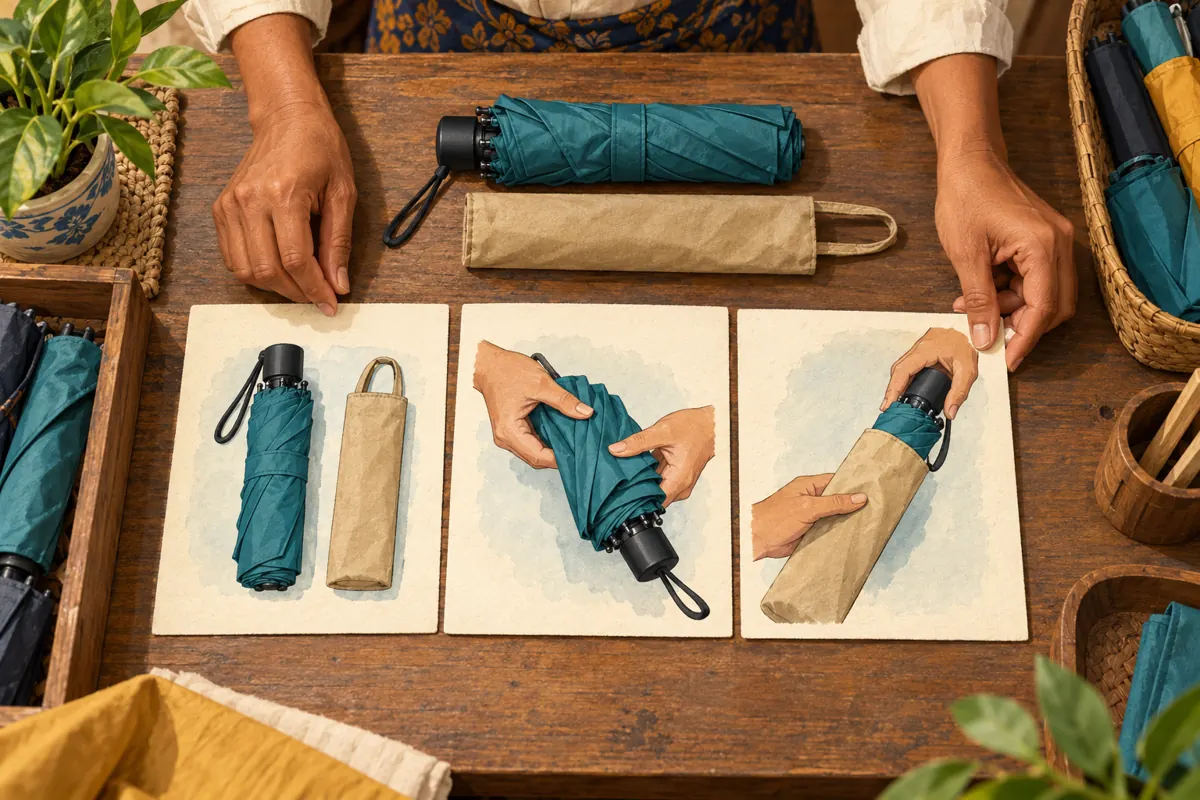
Storyboard three moments: identify the umbrella and sleeve; show how the fabric is gathered; show the resulting fit without forcing it. Keep the product orientation consistent between recordings. If the handle points downward in one pane and sideways in the other, the viewer must mentally rotate the object before comparing it. Similar framing reduces that unnecessary effort.
Use the same umbrella and sleeve for a folding-method comparison. Changing both the product and the technique makes the result ambiguous. If the purpose is instead to compare two sleeves, state that explicitly and keep the umbrella constant. Pause long enough at each important moment for a viewer to inspect the shape. Do not speed up a difficult insertion so that it appears effortless.
Record the explanation around the original
On an eligible source video, look for Duet in the sharing options, then prepare the additional recording. TikTok’s official Duet introduction describes starting from the source video’s share arrow. Rehearse against the original timing before making the final take. Point to the relevant part only while it remains visible, and avoid covering the sleeve opening with your hand.
For the hypothetical shop, the spoken explanation can identify the loose fabric, demonstrate gathering it evenly and show the final insertion. Use the language the intended customers understand; Khmer may suit the shop’s local enquiries, with a genuine model name retained where useful. Keep background sound from competing with the explanation. Review the actual preview rather than assuming that the recorded voice, original audio and framing combine as intended.
Make the limits visible
A successful demonstration establishes only what happened with the pictured items. It does not prove that a replacement sleeve fits every umbrella of a similar colour or advertised size. Include the product identifier in the post description and explain which measurements or photographs the shop requires for other models. Avoid describing a sleeve as waterproof unless the shop has appropriate evidence for that specific product.
Separate packing from care advice. A dry demonstration does not establish how the product should be stored after rain. Follow the manufacturer’s care instructions where available and avoid inventing a universal drying rule. Likewise, stop the demonstration if insertion requires force or appears to strain the fabric. A useful promotional video can show a limitation honestly and help the buyer choose another sleeve.
Turn the demonstration into an answerable enquiry
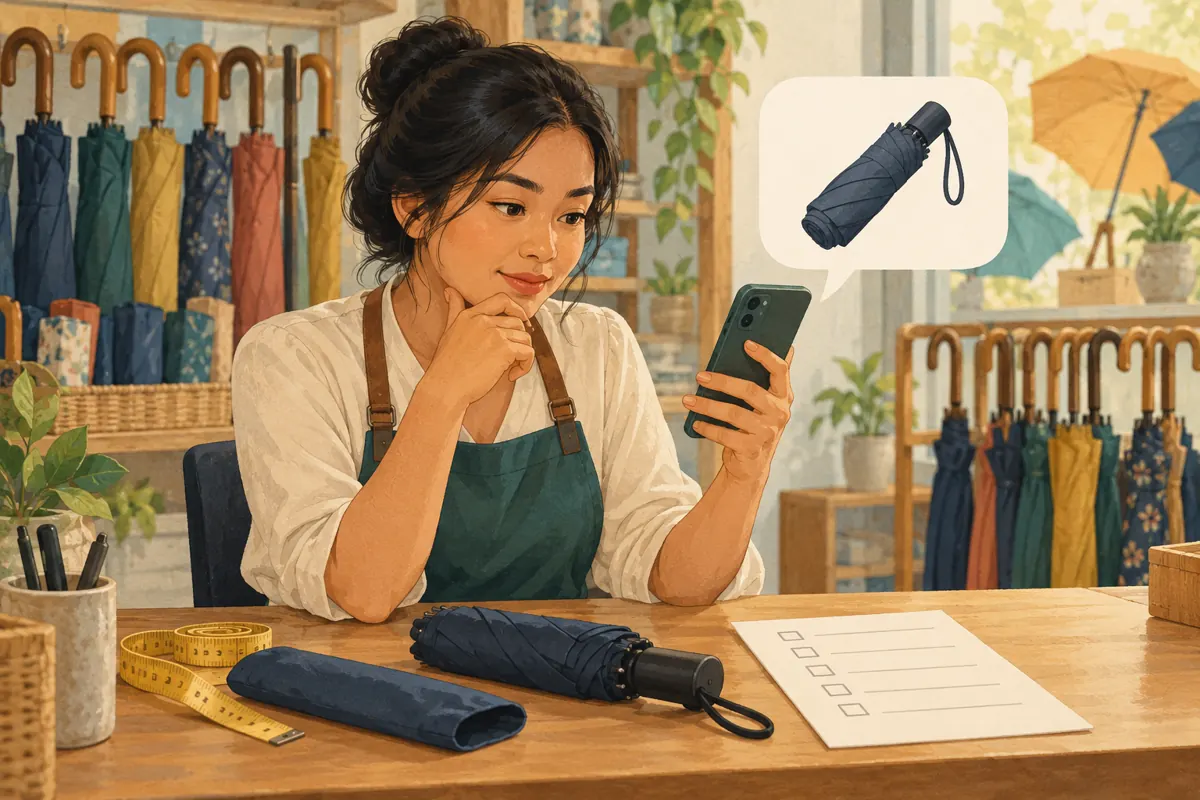
End with a request connected to the demonstrated problem. In this hypothetical example: send the umbrella model, a photograph of the folded umbrella beside its current sleeve, and its folded length. Ask for another measurement only if staff actually need it. A short, purposeful request is easier to answer than a generic invitation to send every possible product detail.
Prepare the staff response at the same time. The person handling messages should know which sample appeared, whether the sleeve is sold separately and what still needs checking. Confirm pickup or delivery arrangements individually when necessary. Do not let a video demonstration become an accidental stock reservation or a promise that a customer can collect immediately. Keep compatibility advice, availability and order confirmation distinct.
Assess the SMM-panel question before spending
The supplied smm-asian.com catalogue includes the exact listing “TikTok - Video Views ~ Max Unlimited ~ 10M-500M/Days ~ Instant ~ 𝐍𝐎 𝗥𝗘𝗙𝗜𝗟𝗟”. Its title identifies a video-view offering, but the supplied description is empty. The title’s volume, timing and other wording are catalogue claims, not verified delivery evidence. Nothing provided establishes Cambodian viewers, interested shoppers or an official advertising relationship.
TikTok’s Integrity and Authenticity rules prohibit services that artificially boost engagement or manipulate recommendations. Do not use artificial views to make this demonstration appear popular. Purchased engagement is not evidence of genuine interest, sales, ad delivery or Cambodian users. For this workflow, spending on clearer filming, accurate explanation and responsive enquiry handling addresses the actual problem. If a proposed service cannot explain its method adequately, leave it out of the campaign.
Review understanding after release
Keep a small question log once the video is public. Record whether viewers identify the sleeve, supply the requested information and ask about a detail the demonstration omitted. Keep observations factual: a message that names the model is evidence of a more specific enquiry, while a purchase requires its own confirmed order record. Do not attribute every later shop sale to the Duet.
Look for repeated misunderstandings rather than treating one comment as a verdict. If several enquiries confuse the sleeve with the umbrella, clarify what is included. If people cannot locate the fastening strap, prepare a close-up follow-up. Record any change alongside its date so staff know which explanation customers may have seen. The review should produce a concrete improvement, not simply a larger collection of screenshots.
Avoid misleading comparisons and rushed cleanup
Common mistakes include comparing different products without saying so, hiding the difficult part behind a hand, leaving two voices competing and using a creator’s reaction as supposed customer proof. Another mistake is adding so many instructions that neither pane remains readable. Remove any element that does not help the viewer understand the fit or make an appropriate enquiry.
Be careful with reuse cleanup. TikTok says that Remove all posts in reuse history permanently removes the original and associated Duet and Stitch videos. Do not treat that action as a harmless switch for future participation. Decide first whether the issue concerns permissions, a misleading claim or material that must be removed. Review the consequences and preserve any needed original copy before taking an irreversible action.
Frequently asked questions
Should we use Duet if the sleeve opening becomes too small to see?
No. Use a full-frame close-up or a sequential demonstration when the divided view hides the important detail. You can still explain the comparison verbally. Ask a colleague unfamiliar with the filming to describe what changed; their answer is a practical check of whether the visual explanation works.
Does an enabled Duet option mean the creator recommends our shop?
No. Permission to reuse content is separate from an endorsement. Describe the actual collaboration accurately and obtain agreement before implying that a creator recommends a product or business. If the source merely demonstrates folding, keep your explanation limited to that demonstration.
What should we do if Duet is unavailable on the source?
Check with the source owner and review the applicable account and post controls. Do not bypass their choice by downloading and republishing the footage. A shop-owned standalone demonstration can answer the same customer question without depending on another account’s participation.
Can a high view count show that Cambodian customers want replacement sleeves?
A view count alone cannot establish location, buying intent or demand for that product. Relevant enquiries provide more useful context, and confirmed orders provide separate evidence of sales. Purchased engagement does not establish any of these outcomes and should not be used to support a market-demand claim.
What if customers still ask whether every sleeve fits every umbrella?
Make the compatibility limit more prominent and show the exact sample again. Ask which wording created the confusion, then revise the explanation around that point. Staff should request the necessary product details before confirming fit instead of treating the demonstration as a universal compatibility guide.
Explore the current service catalogue, create an account, or ask a specific question through support tickets.
- TikTok — Community controls: Duet and Stitch
- TikTok Help Center — Duet privacy settings
- TikTok Newsroom — DIY: Duets & Reactions on TikTok
- TikTok Community Guidelines — Integrity and Authenticity
Prepared with AI assistance. Illustrations explain the workflow and do not represent customer results.