
22/10/2026 03:19
Too Fast to Follow? YouTube Playback Checks for Cambodian Sewing-Machine Shops

A sewing-machine demonstration can look clear to the person who filmed it and feel impossible to follow for someone watching on a phone. Before promoting the video, find out whether the problem is the viewer’s playback setting, a rushed demonstration or an edit that removed an essential movement. Each needs a different response. For Cambodian shops using YouTube to explain machines and attract enquiries, this distinction helps turn a vague complaint into a useful improvement. It also prevents an expensive mistake: treating additional engagement as a solution to instructions that customers still cannot understand.
Start with the movement the viewer missed
In a hypothetical example, a Phnom Penh sewing-machine shop uploads a Khmer demonstration of an upper threading sequence. A viewer says the thread appears beside one guide and suddenly appears inside another. The owner remembers performing the whole sequence and assumes the viewer watched carelessly. However, the published video may show less than the owner remembers.
Ask which movement became unclear and whether the viewer can identify the last visible position of the thread. Request a video time or a description of the part, rather than a general judgement about whether the tutorial is good. Then watch that exact passage yourself. The immediate objective is to locate the missing explanation, not persuade the viewer that the video already answers the question.
Keep this review specific to the machine shown. Similar-looking models can have different arrangements, so an illustrative tutorial should identify its model and avoid presenting one route as universal.
Separate filming, editing and playback
There are three places where the pace can change. During filming, the demonstrator may move too quickly or cover the guide with a hand. During editing, a cut may remove the transition or a speed adjustment may shorten it. During viewing, the player may run the finished video faster than normal. Investigate these possibilities separately.
Compare the original recording, the exported video and the published passage. If the movement exists in the recording but disappears in the export, inspect the edit. If both files show the movement clearly but the viewing session feels accelerated, inspect the player. If the original recording never shows the thread entering the guide, capture that action again.
Slower playback gives viewers more time to observe recorded information. It cannot reveal an action behind a hand or restore footage removed before upload. That distinction should determine whether the next action is a viewing tip, an editing correction or a new shot.
Check the player before judging the tutorial
YouTube’s official Android instructions say to open the video, tap it, open Settings and select Playback speed. For a review, choose normal speed first. Replay the disputed passage, then select a slower available setting if closer observation would help. Record which setting you used so another reviewer can repeat the check.
YouTube also documents a press-and-hold gesture that temporarily plays a video at twice the speed; releasing the finger ends that acceleration. When helping someone at the shop counter, observe how they touch the screen. An accidental gesture is a viewing issue, not evidence that the uploaded file has changed.
Do not promise identical controls on every screen. YouTube notes that playback speed may be unavailable on some smart televisions and streaming devices. Keep the essential explanation understandable at normal speed, with slower viewing offered as an optional aid. The official playback help page is listed in the sources.
Test understanding without demonstrating over the video
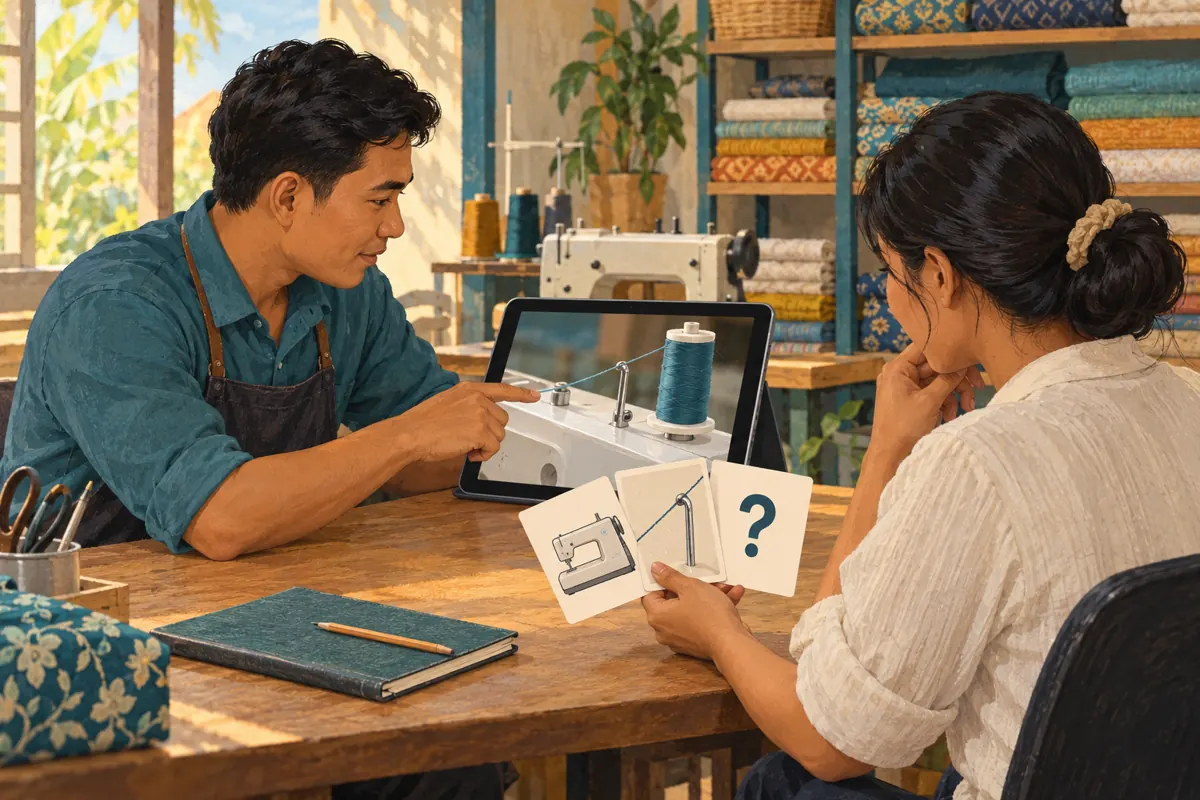
Invite a colleague who did not edit the tutorial to watch the relevant passage on a phone. Ask them to describe what happens immediately before and after the unclear movement. Avoid narrating over the video during this first pass: your explanation could hide the very gap you are trying to find.
Use a simple review note with the passage, viewing setting, uncertainty and proposed correction. A useful entry might say that the reviewer could locate the upper guide but could not see which side the thread entered. An entry saying only that the video needs more energy gives the editor little direction.
For a Khmer-speaking audience, conduct the review in Khmer where practical. If the machine’s manual uses an English part name, connect that term to the visible part consistently. The purpose is to check comprehension, not test whether customers know the same technical vocabulary as the seller.
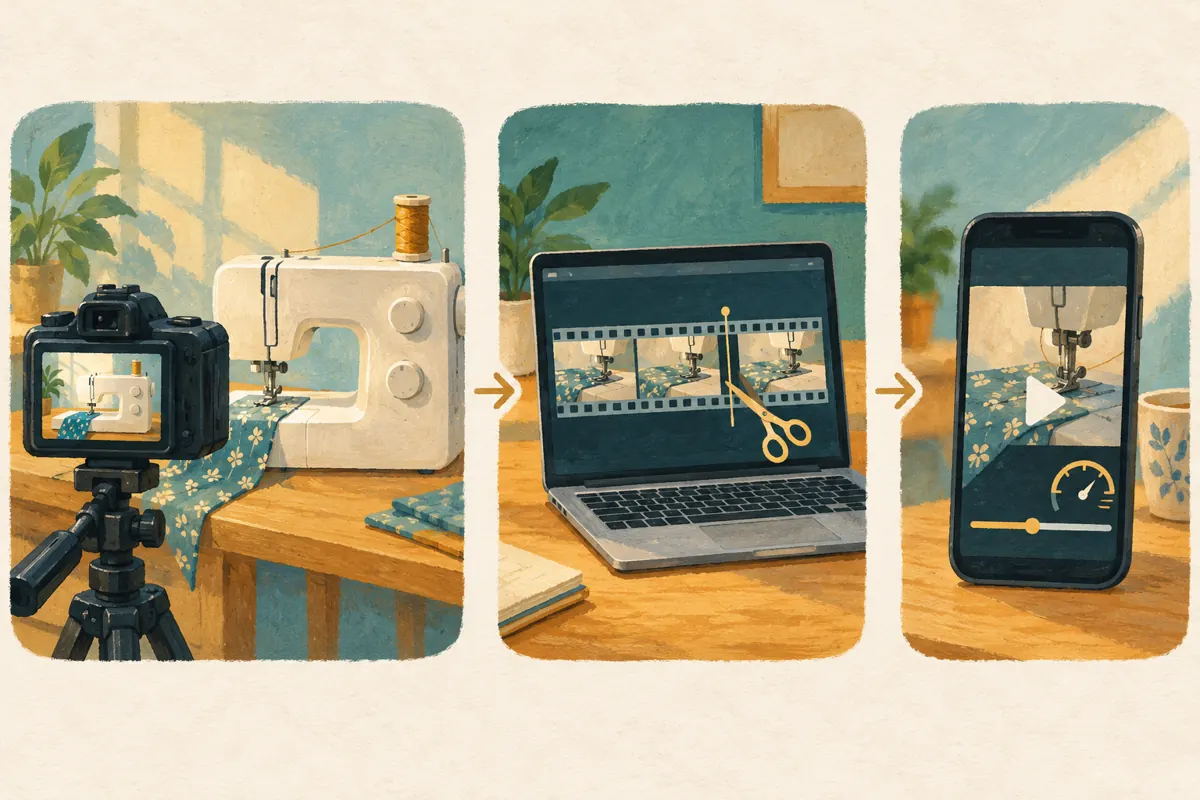
Refilm the transition that carries the explanation
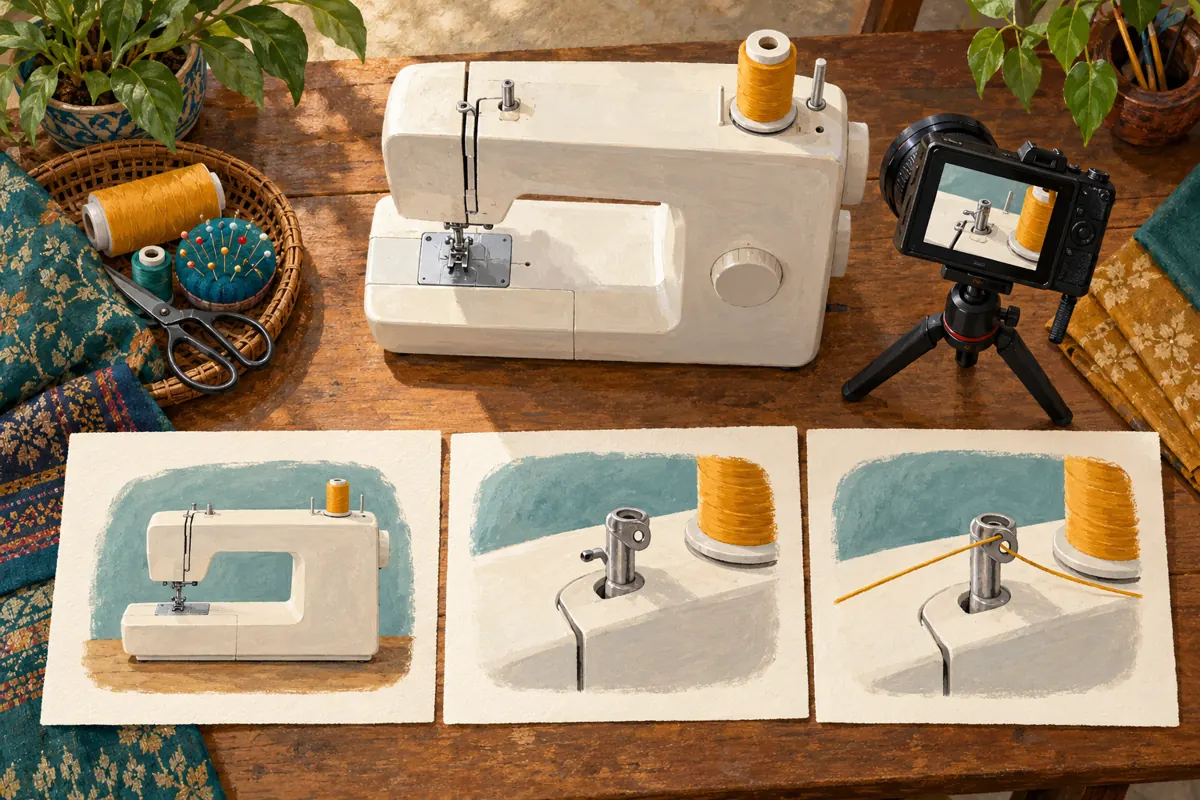
Plan three views for a difficult movement: enough of the machine to locate the part, a closer view of the action and a brief view of the completed position. Preserve visual continuity between them. An extreme close-up may reveal the thread beautifully while leaving a beginner unsure where that detail belongs.
Choose lighting and thread contrast that make the route visible on the actual machine. Keep the demonstrator’s hand from blocking the key moment, and leave time for the viewer to inspect the result before moving on. Follow the model’s manual and its safety instructions when staging the demonstration; this editorial workflow is not a substitute for operating guidance.
The illustrations accompanying this article explain filming and review decisions. They are conceptual scenes, not technical threading diagrams. A shop’s published instruction should rely on its actual machine, verified procedure and clearly recorded movements.
Give the explanation room to work
A concise tutorial does not require every action to happen quickly. Remove unrelated setup or repeated introductions before shortening the movement that customers need to understand. If a close-up requires extra time, let it stay on screen. Review the sequence with its spoken explanation rather than evaluating silent footage alone.
In a hypothetical Battambang shop, the owner notices that the Khmer narration names the next guide while the picture still shows the previous one. Slowing the player makes the mismatch last longer. Moving the sentence to match the visible action is the useful correction.
If the finished tutorial contains an intentionally slowed replay, identify it clearly in the video. Keep any claim about actual operating speed separate from that replay. A slowed instructional view can help explain movement, but viewers should not have to guess whether they are seeing real-time operation or an editorial treatment.
Turn the repaired tutorial into a focused promotion
Build the promotional message around the question the corrected passage answers. For example, a hypothetical shop could introduce the video as a close look at one upper thread guide on the model shown. That gives prospective viewers a concrete reason to watch without promising that one demonstration solves every threading problem.
Include the model reference and explain what information the shop needs for a relevant enquiry. A customer could provide the model name and identify the unclear part, while keeping personal details out of public comments. If the shop offers demonstrations or appointments, mention only arrangements it has actually confirmed.
Have the staff member handling enquiries watch the final version. They should know which movement it explains and which questions require separate help. Promoting a useful video creates an opportunity for a conversation; it does not establish compatibility, stock availability or a confirmed sale.
Apply a policy and evidence check to SMM services
An SMM panel catalogue should not determine the tutorial’s success criteria. The supplied catalogue includes the exact public name “YouTube - Social Share ~ Speed 1000/days ~ 90 days Auto Refill Protection”. Its description is empty. The title identifies a share-related listing, but the available information does not independently establish its methods, delivery conditions, audience or the promises embedded in its name.
YouTube’s fake engagement policy prohibits artificially increasing engagement metrics and warns that a hired promoter’s actions can affect the channel. Before considering any service, establish how it operates and whether that method complies. Decline artificial engagement methods. An unclear mechanism is a reason to stop, not a reason to infer approval from a catalogue listing.
Purchased engagement is not evidence of genuine interest, sales, advertising delivery or Cambodian users. It also cannot demonstrate that someone understood the thread path. No panel relationship should be described as an official YouTube affiliation without evidence.
Choose the next action from the actual finding
If the sequence is clear at normal speed and the confusion occurs only during accelerated viewing, offer a brief playback instruction. If a visible movement is understandable only with careful slowing, consider a clearer replay or longer shot. If the movement is absent or obstructed, repair the footage before directing more people to it.
If the viewer’s machine differs from the demonstration model, explain the limitation and seek the correct model reference. A playback adjustment cannot solve a mismatch between machines. Similarly, a question about available stock or a repair appointment needs a business response rather than another tutorial edit.
Assign one person to verify the final video and another to check the customer-facing message where staffing allows. Save a short decision note explaining what changed and why. This gives the next employee a useful handover and prevents an old, unresolved complaint from being treated as a new mystery.
Avoid mistakes that make the review inconclusive
Do not compare one viewing session at normal speed with another at an unknown setting and attribute the difference entirely to editing. Do not replace footage, narration and the promotional message simultaneously if you need to understand which problem was fixed. Make the smallest meaningful correction, then check the same passage again.
Avoid interpreting silence as proof of clarity. A viewer may leave without asking a question. Equally, repeated questions do not automatically mean a failed tutorial: some may concern a different model or a detail outside its scope. Group questions by the missing information before deciding what to film next.
Keep delivery records, viewer feedback and business enquiries distinct. A service record describes a service transaction; a specific question describes an information need; a confirmed appointment describes a business outcome. Reviewing them together can inform planning, but none should be substituted for another or used to invent customer satisfaction.
Frequently asked questions
Should every customer be told to slow the tutorial down?
No. Start by making the essential sequence understandable at normal speed. Slower viewing is useful for inspecting a small movement, but requiring it for the whole tutorial may conceal rushed narration or poor shot timing. When recommending it, identify the passage and explain what the viewer should look for.
Can slower playback fix a jump between two thread positions?
Only if the transition was actually recorded and remains in the published video. Slowing a cut merely leaves more time on either side of it. Compare the original footage with the export, then restore the missing transition or record a clearer one if necessary.
What if a customer cannot find the playback control?
Ask which device and viewing environment they are using before giving instructions. Refer them to YouTube’s official device guidance. You can also provide a clearer normal-speed explanation of the difficult movement, so access to a particular control does not become a condition for understanding the tutorial.
Would a share-related panel service prove the corrected tutorial is helpful?
No. A service delivery claim does not establish that relevant viewers watched, understood or acted on the explanation. The supplied listing also lacks a description that verifies its method. Assess any proposed method against platform policy, and use specific, voluntary feedback to investigate clarity.
What should the shop review after promoting the corrected video?
Look at the content of genuine questions: whether viewers still miss the same movement, ask about another model or request a different demonstration. Record enquiries and confirmed appointments separately. These observations can guide the next tutorial, but they do not establish that every viewer understood or that promotion caused a sale.
Explore the current service catalogue, create an account, or ask a specific question through support tickets.
- YouTube Help: Speed up or slow down YouTube videos — Android phone and tablet
- YouTube Help: Fake engagement policy
Prepared with AI assistance. Illustrations explain the workflow and do not represent customer results.