
20/10/2026 22:46
Own Demo or Paid Partnership? TikTok Disclosure for Cambodian Refill-Soap Shops
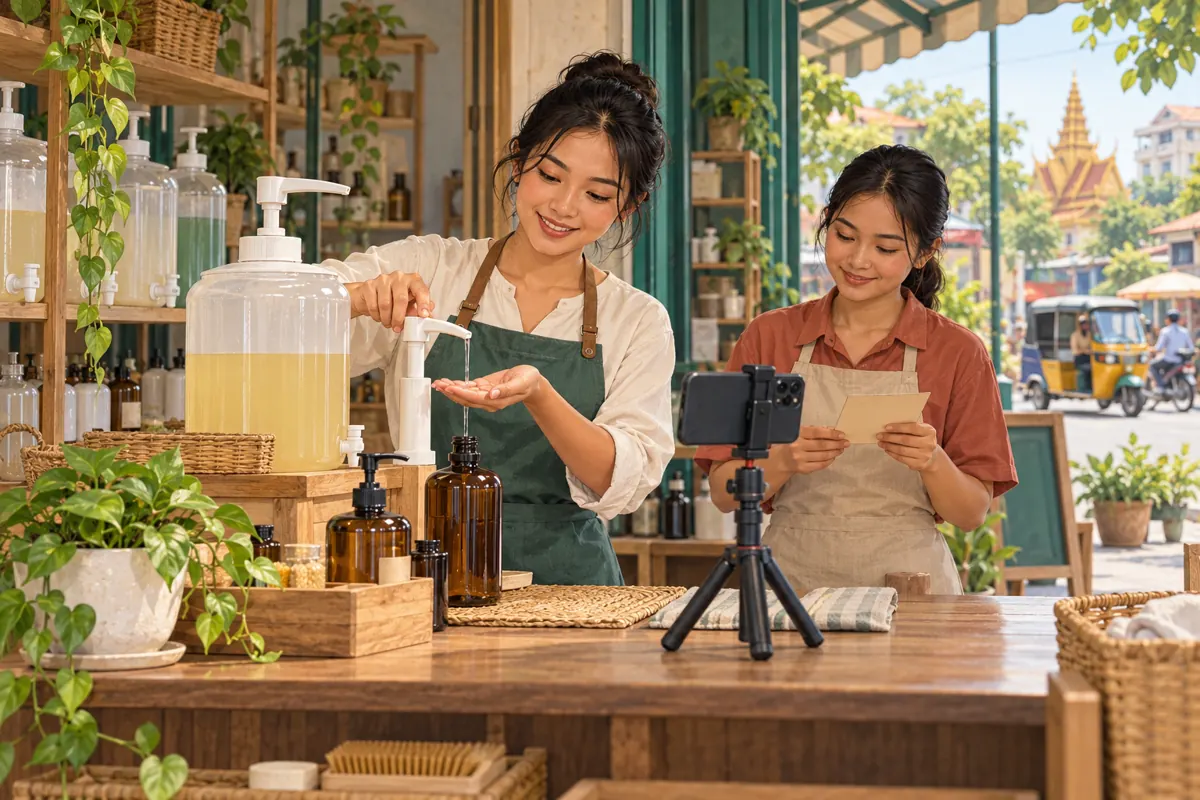
A refill demonstration can look like an everyday helpful video while also promoting a business. For a Cambodian soap-refill shop, that creates a practical question before publication: is the owner explaining the shop’s own service, or is a creator promoting it under an arrangement? Decide this while preparing the video, alongside the bottle details and collection instructions. This guide uses a hypothetical Phnom Penh refill shop to show how to document the relationship, review the disclosure, handle a mistake and evaluate promotion requests without treating purchased engagement as customer demand. The examples are editorial illustrations, not reports of actual businesses or results.
1. Start with the relationship behind the demonstration
Before choosing music or editing the opening shot, write one sentence explaining who is publishing and why. For the hypothetical shop, that might be: the owner is demonstrating the refill service on the shop account. A different sentence would be: an independent creator receives a refill package in exchange for making a promotional video. These descriptions give the person uploading something concrete to check.
TikTok requires its commercial-content disclosure setting for posts promoting a business, including your own, and for third-party promotion involving payment or another incentive. Its Help Center distinguishes the Promotional content label for your business from Paid partnership for another business. See the official guide listed in sources.
Keep the relationship note with the draft. A bottle appearing in a frame does not explain the agreement behind it, and a familiar face does not establish whether someone is an employee, customer or commissioned presenter. Ask the responsible person when the arrangement is unclear.
2. Define what the refill video actually promises
For the hypothetical shop, choose one useful question: does the displayed offer include a reusable bottle, or only the soap refill? Film the container and the refill process clearly enough to answer that question. The business relationship and the product offer are separate facts; viewers need both to understand the post.
Prepare a short factual brief covering the product shown, whether the container is included, the stated quantity, and the collection arrangements. If a price appears, identify the currency and what the price buys. Use the shop’s confirmed information rather than guessing from a previous campaign. Avoid unsupported environmental, hygiene or skin-benefit claims.
For a Khmer-speaking audience, have a fluent reviewer check the spoken explanation and visible offer wording. An English product name may remain useful, but the distinction between a bottle purchase and a refill should be understandable without specialist vocabulary. Disclosure cannot repair an ambiguous offer.
3. Resolve creator arrangements before filming
Imagine the same shop invites a local creator to demonstrate how a pump bottle opens. In this hypothetical arrangement, the creator receives products in return for a video. Record that exchange plainly before production. Do not let a casual description such as helping a friend replace the actual terms of the arrangement.
The brief should identify the publishing account, the product supplied, the promised deliverable, the factual reviewer and the person responsible for checking disclosure. Agree separately on whether the shop may reuse the footage. A creator handing over a finished video does not answer every question about future use.
Give the presenter room to explain what they genuinely observed. If the pump was difficult to open during filming, fix the demonstration or describe the issue accurately. Do not replace it with a scripted claim of effortless use. Likewise, avoid presenting a commissioned demonstration as an unsolicited customer discovery.
4. Apply the setting during the upload review
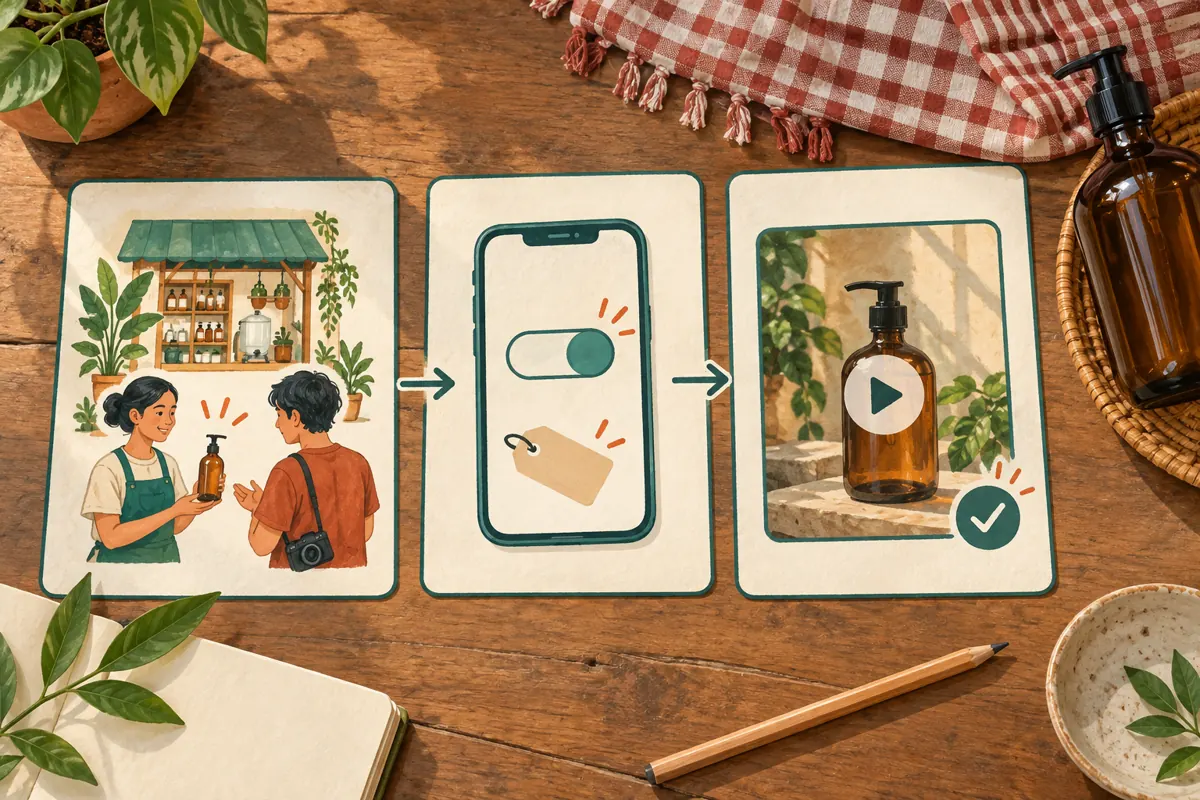
TikTok’s Business Help Center describes this posting route: open Content disclosure and ads from the post screen, using More options if necessary; enable Disclose commercial content; select Your brand or Branded content as appropriate; then save and confirm before posting. Consult that official walkthrough if the controls are unfamiliar.
Make this a deliberate pause in the shop’s upload routine. The uploader should compare the selection against the relationship note, then check the video and caption against the approved offer. Reading the note aloud can help a small team catch an assumption that never reached the written brief.
Assign one person to complete the upload and another to verify the published result when staffing allows. For a solo business, separate those tasks in time: finish posting, reopen the post, and inspect it as a viewer. Check the visible disclosure, sound, container explanation and enquiry instructions before sharing the link elsewhere.
5. Separate disclosure from advertising permission
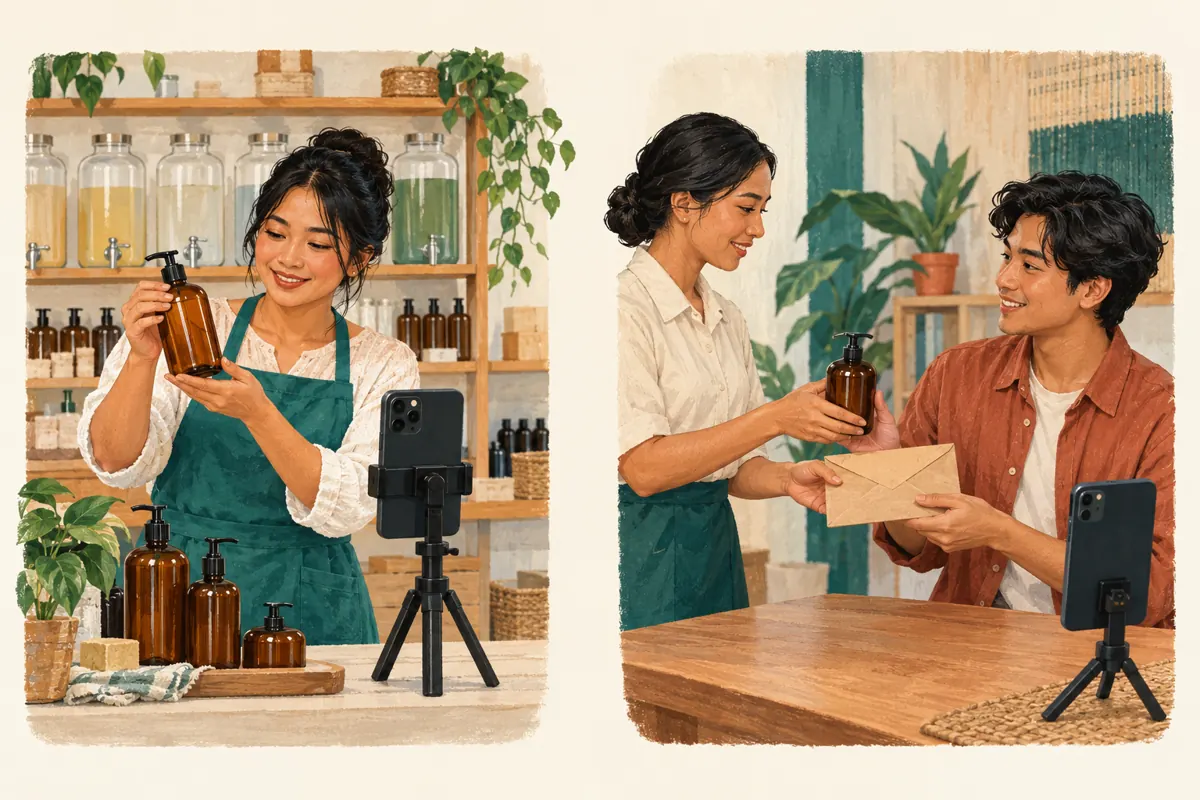
A commercial label answers a question about the nature of the content. The shop still needs a separate decision about any advertising use. In a hypothetical creator collaboration, the owner might approve the product facts while the creator retains control over whether the footage can be used in a paid campaign.
TikTok explains that brand-partner tagging can involve advertising authorization and access to post insights. Review the displayed options and the agreement before enabling them. Treat that review as a specific decision rather than an incidental step in selecting a label.
Use a compact approval note: the agreed post, the account publishing it, the approved wording, the permitted reuse and any advertising permission. Avoid placing private payment details in that note if several people will receive it. The purpose is to let each person see what they may do with this particular video.
6. Correct missing or mistaken disclosure carefully
If a staff member notices a problem after publication, first identify the exact post. Record its link and describe the issue precisely: disclosure absent, relationship classified incorrectly, or offer wording inaccurate. These are different problems and may require different corrections. Pause planned sharing while the responsible person checks.
TikTok provides a route to enable disclosure on an existing post through More options and Ad settings. Its Help Center says a published disclosure label cannot be changed; an incorrect selection requires removing the post and creating a new one. Check the current guidance before acting.
If replacement is necessary, keep the approved source video and prepare the corrected version before removing the old post. Update any campaign notes and shared destinations afterward. A replacement needs its own reviewed link. If a third-party service request already references the old post, check its actual terms; do not assume it can transfer or be refunded.
7. Assess SMM panel listings without confusing them with disclosure
A listing in the supplied smm-asian.com catalogue is named TikTok Live Stream Viewers ~ 🇨🇳 China ~ 15 Minutes. Its title identifies a LIVE-viewer offer with a geographic label and duration wording. The supplied description is empty, so it does not establish delivery methods, audience identity or further conditions. It is not a disclosure-setting service.
That distinction matters even if the shop is planning a live refill demonstration. A catalogue label does not establish Cambodian viewers, buying intent, genuine participation or official TikTok affiliation. Purchased engagement is not evidence of sales, ad delivery or customer interest, and it cannot fix an incorrectly disclosed post.
TikTok’s official explanation of deceptive behaviour prohibits fake engagement and services that artificially inflate engagement. Assess any panel offer against that restriction before considering expenditure. Where the proposed service depends on artificial engagement, leave it out of the plan. A useful alternative is to spend the preparation time improving the demonstration and answering genuine product questions.
8. Promote the useful answer, then record real enquiries
Once the hypothetical video is reviewed, introduce it with the question it resolves: whether buyers should bring a bottle or purchase one at the shop. When sharing it through an existing business communication channel, preserve that context. A vague invitation to watch something exciting gives prospective customers less reason to open it.
Prepare a response for the practical questions the video may leave unanswered. Staff should know where to verify stock, container suitability and collection times. Ask customers only for information needed to answer their request. Do not invite people to post addresses or payment information publicly beneath the demonstration.
Keep a simple enquiry record separate from publication and service records. Note the question asked, the answer provided and whether an order was actually confirmed. If someone says they found the shop through the video, record that as their statement. Do not turn every enquiry into a sale or attribute every sale to the latest post.
9. Avoid shortcuts that create a misleading impression
One common shortcut is approving a video because the product looks good while ignoring who is speaking. Another is asking a creator to sound like an ordinary customer even though the shop commissioned the content. Review the presenter’s introduction and relationship note together so the story does not imply an independent recommendation that never occurred.
A different mistake is treating a disclosure label as proof that every claim in the video has been checked. Continue reviewing bottle inclusion, quantity, availability and collection instructions. A correctly classified commercial post can still contain an incorrect offer.
Also avoid assuming that one approval covers every later use. A shorter edit might remove the sentence explaining that the bottle costs extra. A translated caption might change the offer. A repost might come from a different account. For each proposed use, review what the audience will actually see and the relationship relevant to that publication.
10. Make the next demonstration easier to review
After the hypothetical campaign, hold a short review around confusion rather than popularity. Did viewers ask whether the bottle was included despite the explanation? Did staff disagree about the creator arrangement? Did a corrected post leave an outdated link in a shared message? Each answer points to a specific improvement.
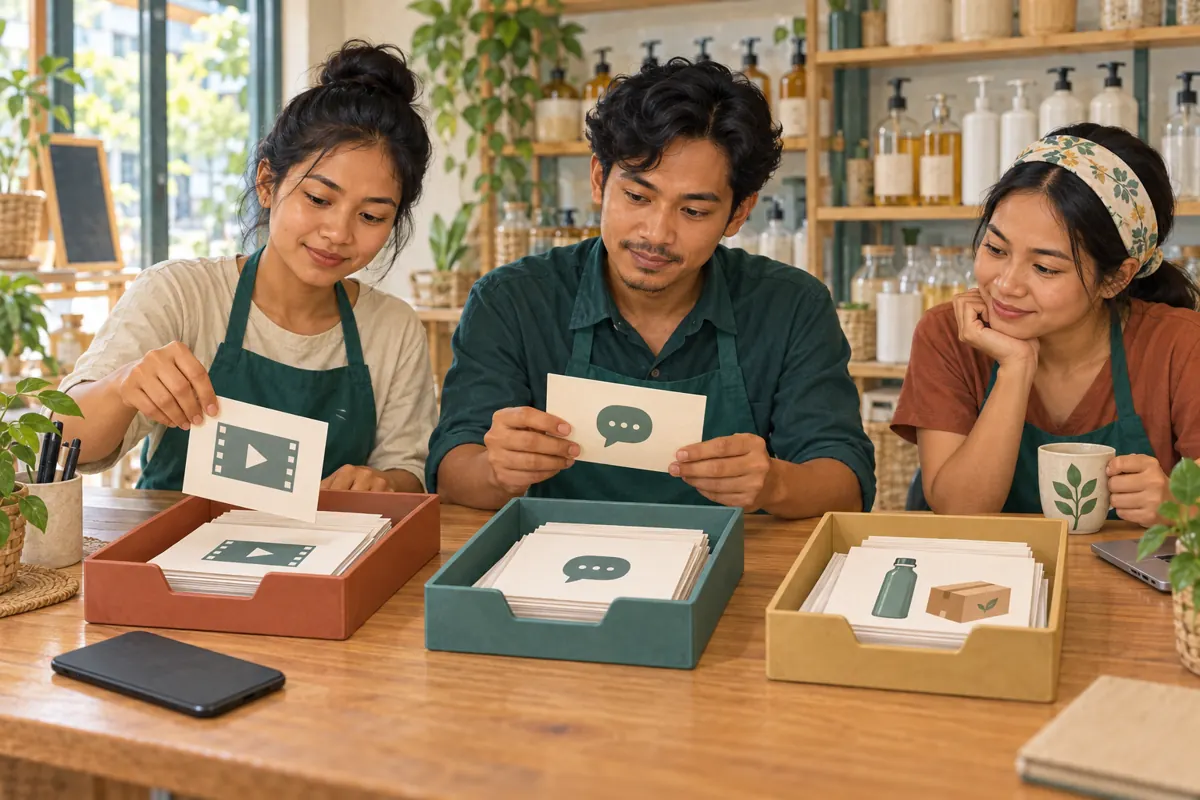
Keep a reusable brief with fields for publishing account, commercial relationship, product facts, disclosure review, footage permissions and final link. Leave space for a reviewer’s name and unresolved questions. A blank field is more useful than an automatic approval copied from the previous video.
For the next demonstration, choose the question customers actually struggled with. The shop might show how to identify the correct refill container or explain collection preparation. Preserve the same review discipline while changing the subject. The workflow succeeds when the team can explain what was promoted, who promoted it and what evidence supports the outcome.
Frequently asked questions
Does an owner’s unpaid demonstration still need disclosure?
TikTok includes promotion of your own business in its disclosure requirement. For the hypothetical refill shop, the owner showing the service is a commercial post even without a creator fee. Record that ownership relationship so the uploader does not mistake the absence of payment for the absence of promotion.
Will enabling disclosure guarantee or reduce reach?
TikTok says enabling the setting does not affect feed distribution. That statement is not a promise of views, enquiries or sales. Judge the demonstration by whether it answers a useful question and supports accurate customer conversations, rather than treating the label as a performance tactic.
What if the creator receives soap instead of money?
Document what was supplied and whether promotion was agreed in return. TikTok’s guidance includes incentives beyond payment. For a product-for-video arrangement, give the uploader the actual agreement rather than describing the package as an ordinary purchase. If the facts are unclear, resolve them with the creator before publication.
Can an SMM panel make the post correctly disclosed?
Do not assume that a service listing manages publication settings. The supplied LIVE-viewer listing contains no such description. Disclosure needs to be checked on the actual post by its responsible publisher. A panel order also provides no basis for calling viewers Cambodian customers or claiming that a demonstration generated sales.
What should a small shop retain after review?
Keep the approved video, final caption, relationship note, relevant permissions and published link. Add a brief correction record if something changed. Store actual orders in the normal business system and enquiries in a separate log. This gives the next staff member enough context without mixing promotional activity with customer commitments.
Explore the current service catalogue, create an account, or ask a specific question through support tickets.
- TikTok Help Center: Promoting a brand, product, or service
- TikTok Business Help Center: How to turn on the Commercial Content Disclosure setting in TikTok
- TikTok Newsroom: How TikTok counters deceptive behaviour
Prepared with AI assistance. Illustrations explain the workflow and do not represent customer results.