
21/10/2026 12:42
Inside Width or Rim Width? YouTube Corrections for Cambodian Basket Shops

A basket demonstration can look convincing while giving buyers the wrong measurement. The presenter says “inside width,” but the tape actually crosses the outside rim. For a Cambodian shop selling storage baskets through social media, that difference can affect whether a customer's belongings fit or whether the basket fits a shelf. Before sharing the video again or considering an SMM-panel service, establish what needs correcting. This guide uses a hypothetical basket shop to explain how to verify the mistake, add a YouTube correction, check the viewer experience, and decide when a replacement demonstration is the better choice.
1. Identify the statement a buyer could act on
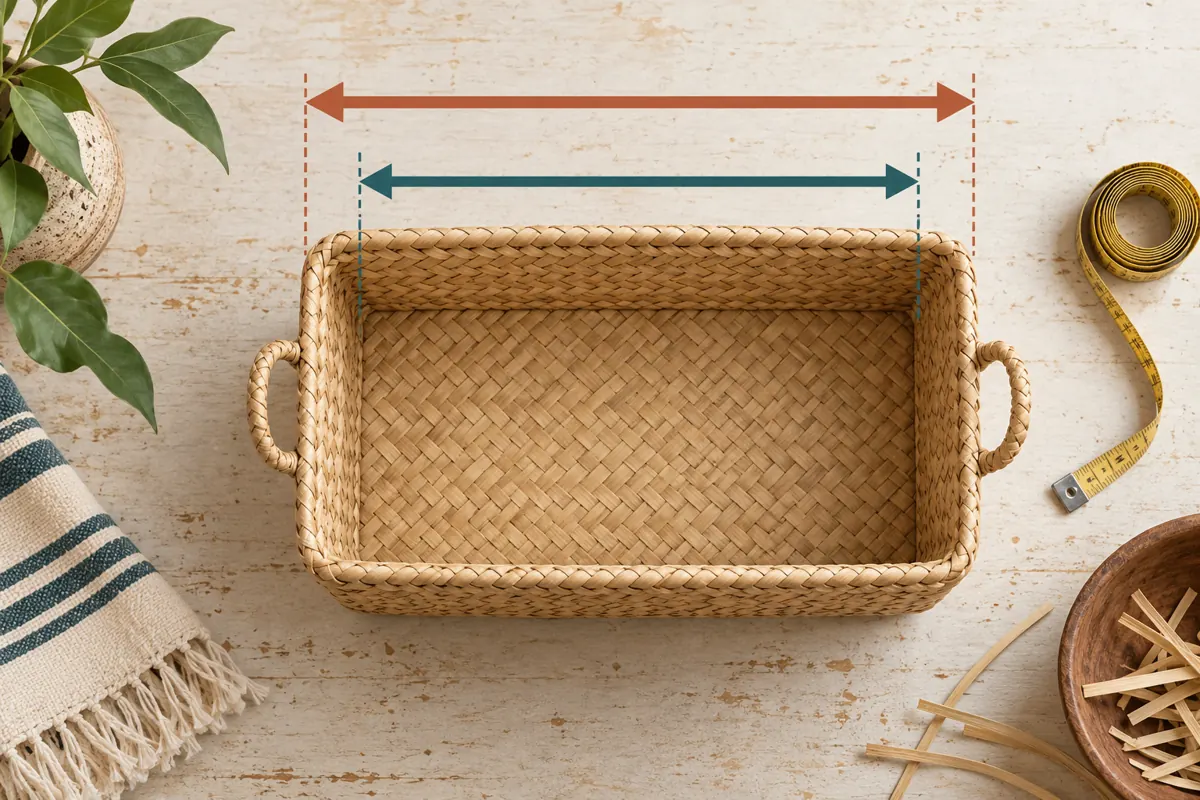
In this hypothetical example, a Phnom Penh basket shop publishes a demonstration of a rectangular woven basket. At 0:42, the presenter calls a measurement of 36 centimetres the inside width. A later check shows that 36 centimetres describes the outside rim; the opening measures approximately 32 centimetres. These figures are illustrative, not specifications for an actual product. The problem is the relationship between the number and the surface being measured.
Write down the exact spoken statement, its timestamp, and what the picture shows. Then identify the likely purchasing decision: fitting a storage box inside the basket, placing the basket on a shelf, or matching an existing set. A correction should resolve that decision. A vague note saying “sizes may vary” leaves viewers to guess which dimension was wrong and whether the demonstration still applies.
2. Verify the basket before editing the explanation
Bring the filmed sample back to the counter and confirm its model or stock reference. Measure the opening between the inner edges, then measure across the outside rim. If handles extend beyond the rim, record that span separately. For a tapered basket, check whether the base is narrower than the opening. Label each measurement in the shop's working notes so nobody later substitutes one for another.
Ask a second staff member to repeat the check without first supplying the expected answer. Keep a clear reference photo showing where the tape begins and ends. Handmade construction may produce differences between pieces, so avoid turning one sample measurement into a promise about every item. If the original basket cannot be identified, explain that uncertainty internally and measure current stock before making a new public claim. Do not use a similar-looking basket as silent proof.
3. Decide whether a correction is enough
A description correction is most useful when the mistake is narrow and the remaining demonstration is accurate. An isolated misuse of “inside” may qualify if the basket, measuring action, and other information remain clear. Ask whether a viewer who reads the correction can confidently understand the product. Also consider viewers who miss it: does the uncorrected sequence strongly encourage an unsuitable purchase?
Replace or withdraw the demo from promotion when the wrong measurement drives its central promise. Examples include repeatedly showing that a particular box fits when it does not, demonstrating a different model from the one offered, or displaying incorrect dimensions throughout the footage. A note cannot make those pictures accurate. Do not preserve a misleading sales demonstration merely because its link has already been shared. Correctness should determine the next step, with existing distribution handled afterward.
4. Add the correction using YouTube's documented format
YouTube Help's “Edit video settings” instructions describe the desktop route: open YouTube Studio, select Content, choose the video, edit its details, and save. In the description, put “Correction:” or “Corrections:” on its own line. On the following line, enter the timestamp and explanation. Place this block after any video chapters. The introductory keyword must remain English even when the explanation and video use Khmer.
For the hypothetical demo, the next line could read: “0:42 The 36 cm measurement is across the outside rim. The inside opening of the filmed sample measures approximately 32 cm.” YouTube describes a viewer-facing correction card, and its official blog explains that the information overlay leads to the description entry. The Help page also says the feature is unavailable for channels with active strikes or content that may be inappropriate for some viewers.
5. Write the correction around the customer's question
Lead with the corrected fact, then give the context needed to interpret it. Include the unit, the measurement location, and whether the figure describes the filmed sample or checked stock. Avoid defensive explanations about who made the mistake. The buyer needs to know which width matters. A shelf-fitting question may require the widest external span, while a question about storing a box requires usable internal space.
For a Khmer-speaking audience, have a fluent reviewer check the explanation for the distinction between the opening, rim, base, and handles. Keep model names consistent with the catalogue. Do not change the website's language configuration to accommodate a video correction. If the shop normally communicates in two languages, review both versions against the same physical sample. A correct English sentence does little good if the accompanying Khmer explanation still describes the wrong edge.
6. Review the saved result on a customer's phone
After saving, open the public watch page on a phone used for the shop's normal checks. Start playback before the mistaken statement and observe the experience through that moment. Open the description and read the correction in context. Confirm that the timestamp refers to the actual error and that the text names the right basket. Treat this as a practical viewing test, not proof that every viewer will notice the note.
Have a coworker answer one question after watching: “Which measurement would you use to decide whether this box fits inside?” If their answer is still the outside width, strengthen the explanation or reconsider keeping the demo in circulation. Inspect the title, thumbnail, and description opening as well. A correction buried below the video does not resolve an incorrect dimension prominently advertised in the thumbnail.
7. Find the copies that the correction cannot repair
Make a short distribution list: the YouTube watch link, any separately uploaded excerpts, product cards, customer quote templates, and messages that repeat the disputed dimension. A correction attached to the YouTube video does not rewrite a caption copied into another service or change the words in a separately uploaded clip. Check each item for the same mistaken claim rather than assuming that updating the source settles everything.
Prioritise materials customers can still use to place an order. Update the active product card and the response staff send when asked about size. Where an old excerpt cannot be edited adequately, stop using it and prepare a corrected version. If a customer already received a quote based on the wrong dimension, explain the change directly before confirming the order. Keep the communication specific to the affected product and decision.
8. Read an SMM-panel listing without treating its label as proof
The supplied public catalogue includes “YouTube Unique Views - [PMV™ - Pure Mobile Views] ~ For Videos without Ads ~ 1k-10k/day ~ Instant ~ 𝗥𝗘𝗙𝗜𝗟𝗟 90D”. Its name presents it as a YouTube views service, but the supplied description is empty. The wording alone does not verify its delivery method, timing, refill conditions, audience location, or suitability for a particular channel. It also says nothing about correcting product information.
For a basket shop, the first decision remains whether the destination explains the product accurately. Do not use a service order to compensate for an unclear measurement or to make a disputed demonstration appear credible. If a promotion request already references the video, document the content issue and check the provider's actual terms before assuming the request can be paused, cancelled, or redirected. Never promise colleagues that an available control exists without checking it.

9. Separate compliant promotion from artificial engagement
YouTube's fake engagement policy prohibits artificially increasing views and other engagement metrics. It also states that a promoter's actions can affect the channel that hires them. Therefore, a familiar catalogue name or a completed delivery status is not enough to establish that a method complies with platform rules. If the method depends on artificial engagement, do not proceed. A corrected video still needs an acceptable promotion method.
Purchased engagement is not evidence of genuine interest, sales, advertising delivery, or Cambodian viewers. For this shop, useful observations concern actual customer understanding: whether enquiries identify the right basket, distinguish internal from external dimensions, and provide the information needed for a quote. Share the corrected explanation through relevant, permission-based customer communication. Do not frame a higher counter as proof that the measurement is accurate or that local demand has increased.
10. Give the team a concrete release decision
Keep a compact correction record containing the video address, product reference, disputed statement, verified dimensions, final wording, and review date. Name the person who checked the sample and the person who reviewed the public result. This gives the next employee enough context to answer a question without reconstructing the incident. Keep customer contact details out of this general content record.
Use a clear outcome: ready to share, awaiting measurement verification, or replacement demo required. If the video is ready, supply the approved explanation alongside its link so staff do not reuse an old caption from memory. If it needs replacement, record what the new footage must show, including the tape's contact points. Revisit the explanation when the shop changes supplier, model, or construction, rather than assuming the same dimensions describe every later basket.
11. Avoid fixes that leave the original confusion intact
Common mistakes include writing only “please check the description,” correcting the number without naming the dimension, and selecting a timestamp after the misleading claim has already passed. Another is labelling every figure “approximate” without verifying anything. Approximation describes measurement precision; it does not excuse confusing an opening with an outside rim. Each correction should identify the fact that changed and its practical meaning.
Do not quietly remove the error from internal notes while leaving the sales team with an outdated answer. Equally, avoid treating every later sizing question as evidence that the correction failed. Some buyers need a different measurement or have an unusually tight space. Record the unresolved question and decide whether it needs a better photo, an individual stock check, or another demonstration. The goal is a usable purchasing explanation, not the disappearance of all questions.

Frequently asked questions
Does a YouTube correction change the spoken measurement?
No. It supplies explanatory information associated with the video; the original spoken claim remains in the footage. If buyers could reasonably rely on that claim without reading the note, consider replacing the demonstration. This matters especially when the incorrect dimension is repeated or determines the main product promise.
Can the actual explanation be written in Khmer?
Yes. YouTube requires the correction keyword in English, but the explanation can use the audience's language. Have someone check the Khmer wording against the physical measurement. Preserve the distinction between the opening and rim, and include the unit so readers do not have to infer it.
What if the correction card does not appear during the check?
Recheck the keyword, line structure, timestamp, saved description, and the eligibility limitations in YouTube Help. Confirm that you opened the intended video. Do not claim the viewer prompt is working until you observe it. If the correction is essential to an accurate sales message, hold further sharing while choosing a clearer solution.
Should a shop measure every handmade basket before quoting?
That depends on the customer's fit requirement and the variation in stock. For a tight shelf or a rigid box, check the specific item being offered and explain any remaining uncertainty. A sample measurement can support a general description, but it should not become an unsupported promise of identical dimensions.
Can more views show that customers understood the correction?
No. A view count does not establish that someone read the note, understood the measurement, or intends to buy. Review actual sizing conversations and ask customers which space or object they need to fit. Keep those observations separate from any service delivery record or general traffic change.
Explore the current service catalogue, create an account, or ask a specific question through support tickets.
- YouTube Help: Edit video settings
- YouTube Official Blog: How to add corrections to YouTube videos
- YouTube Help: Fake engagement policy
Prepared with AI assistance. Illustrations explain the workflow and do not represent customer results.